Huberman experimented with Pinealon and found that taking it at the start of the night reduces his deep sleep (not good).
However, if he takes it after waking up in the middle of the night (after he’s had much of his deep sleep already) he’s able to almost double his REM sleep in the final hours.
Huberman goes on to say that:
- He takes Pinealon around 3 times per month
- It increases his percentage of REM sleep on all the other nights in between his Pinealon injections
In the audio clip below, Huberman describes to Dr Bakri his personal experience with Pinealon:
^ Audio clip source
For context with sleep phases, see the below image:


What Is Pinealon?
Pinealon is a bioregulator peptide – one of the smallest peptides used therapeutically. It comes from a line of peptides developed by the Russian scientist Khavinson, who researched bioregulator peptides for decades and published extensively on them.

It’s probably worth noting that Khavinson was particularly enthusiastic about peptide use for extending lifespan. However, he unfortunately died in 2024 at the age of 78, which isn’t particularly old on a global level, although it’s higher than the Russian male average of 65.

Pinealon is often described as supporting the pineal gland and its melatonin-producing cells (pinealocytes), although as covered below, that framing is disputed.
However, no published research has demonstrated pinealon specifically regenerating pineal tissue. The related peptide epithalon has published evidence of stimulating melatonin synthesis in pinealocyte culture (Khavinson’s group, 2012), but this has not been replicated for pinealon.

Is Pinealon Actually a Pineal Peptide?
In the later Bakri episode, Dr Bakri challenged the pineal framing. He said Pinealon (the tripeptide EDR) was sequenced from Cortexin, a brain cortex extract, not the pineal gland; the pineal and melatonin evidence belongs to a different peptide, Epithalon.
Huberman cited animal data showing Pinealon may support pinealocyte function in cultured tissue, the basis for the regeneration idea below. Bakri sees it more as a transcription helper, exposing DNA promoter regions and shifting brain metabolism via GDF-11, SOD-1 and SOD-2. He noted Khavinson never linked it to REM sleep; it was developed as an anti-stress, cognitive-performance compound.
Huberman concluded he’d likely been dosing at the wrong time: “I’m taking it before sleep. I should be taking it in the morning.” His REM effect may be real, but the mechanism and ideal timing remain open.
^ Audio clip source
The Regeneration Hypothesis
Perhaps the most interesting observation: Huberman found that his sleep improved even on nights he did not take pinealon. He and Koniver theorize this could indicate regeneration of pinealocyte function, though this remains unproven.
Published research from Khavinson’s group has shown that the related peptide epithalon can stimulate melatonin synthesis in pinealocyte culture, but no equivalent study exists for pinealon. The carry-over effect Huberman observed is intriguing but currently lacks a confirmed mechanism.
Koniver confirmed this aligns with what he has seen clinically: “Your response has been uniform… people don’t always get there as quickly, but people get there with their sleep.”

Koniver’s Pinealon Protocol
Koniver, from Huberman’s interview, discussed using the following protocol for Pinealon:
- Form: Injectable pinealon combined with glycine
- Frequency: Pulsed, not taken every night
- Glycine dose: 3,000-5,000 mg orally (or included in the injectable formulation)
Why Glycine?
Koniver pairs pinealon with glycine for several reasons:
- Inhibitory neurotransmitter: Glycine calms the nervous system, helping with the transition from wakefulness to sleep
- Phase 2 liver detoxification: Glycine supports amino acid conjugation in the liver, helping the body process toxins during sleep
- Well-tolerated at high doses: Koniver starts patients at 3-5 grams at bedtime and sometimes goes to 10 grams. “Most people at ten grams of glycine will notice it,” he says.
- Available orally: Unlike most peptides, glycine is well absorbed orally and has a sweet taste
For people without access to injectable pinealon, oral glycine alone (3-10 grams at bedtime) may provide some sleep benefits, though the REM-specific effects Huberman observed were with the injectable pinealon combination.
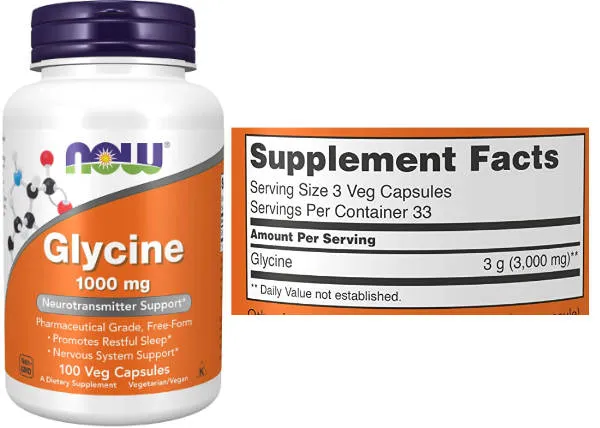
Examples of Glycine brands include:
- Life Extension – Glycine – 1,000 mg capsules (see 20% off iHerb coupon)
- NOW – Glycine – 1,000 mg capsules (see 20% off iHerb coupon)
Safety Profile
The safety profile of many bioregulator peptides, including pinealon, has never been formally tested in large scale randomized controlled trials. Therefore, it’s impossible to precisely say what the side-effect profile is like.
Koniver’s assessment: “I never ever have seen a side effect or negative side effect from pinealon.” This spans years of clinical use across many patients. Huberman’s own experience didn’t involve any side effects per se. However, he did note that taking it at the start of his sleep decreased his slow wave deep sleep, and that sometimes after taking it he would wake up a bit groggy.
Comparison to Pharmaceutical Sleep Drugs
Huberman shared an illuminating comparison. He tried a DORA (dual orexin receptor antagonist) – a newer class of FDA-approved sleep drug that suppresses the wakefulness system rather than pushing the sleepiness system. The drug (possibly Quviviq/daridorexant based on the description) was “a complete disaster” for him – he fell asleep, woke up three hours later, and couldn’t fall back asleep. It was also extremely expensive.
Pinealon, timed after his deep sleep, gave him the opposite experience: more REM in the back half of the night, with occasional grogginess as the only downside.

Sourcing Concerns
Both Huberman and Koniver (see Koniver interview) raised a red flag about gray market pinealon. Because the peptide is relatively obscure and injectable, it would be easy for unscrupulous sellers to put melatonin in a vial, label it pinealon, and sell it online. The buyer would experience some sleep effect (from the melatonin) and might not realize they were getting a substitute.
The recommendation is consistent with all peptides: work with a physician and trusted source to reduce risks.
Oral Bioregulator Peptides
Koniver mentioned that Khavinson’s bioregulator peptide line includes oral forms. Pinealon is one of the peptides reported to survive stomach acid and absorb through the gut, though injectable forms are Koniver’s preference for bioavailability. Oral bioregulator peptides may be harder to source than the injectable form.

The Broader Significance
Huberman framed the REM sleep implications in strong terms. Lack of REM sleep is associated with:
- Reduced neuroplasticity
- Impaired processing of emotional memories (failure to remove emotional labels from prior-day experiences)
- Higher rates of depression and other mental health conditions
- Broadly worsened cognitive and emotional function
A peptide that can potentially double REM sleep represents a significant development in the sleep optimization space, even if the clinical evidence base is still limited to observational data rather than randomized controlled trials.
Whether pinealon acts on pineal tissue, on cortical gene expression as Bakri suggests, or through some other route remains an open question, as does whether bedtime or morning dosing suits it better.
Sources:
- Huberman Lab Podcast – Dr. Craig Koniver: Peptide & Hormone Therapies for Health, Performance & Longevity
- Huberman Lab Podcast – Dr. Abud Bakri: Peptides: The Science, Uses & Safety
Disclaimer: The above information is for research and educational purposes only and not a substitute for professional medical advice. See full medical disclaimer.
Note: We have no affiliation with Andrew Huberman - this article is based on publicly shared information.