Last reviewed September 2026
Most experts take: A once-daily capsule such as Pure Encapsulations O.N.E., or AG1 greens powder, as insurance against gaps in the diet.
Best evidence: Raising nutrient intakes, folic acid before pregnancy, and a small memory benefit in adults over 60.
Weakest evidence: Heart disease, cancer and living longer. Large trials found no effect or a very small one.
More likely to benefit: Anyone who could become pregnant, adults over 50, vegans, people on restricted diets and after gut surgery.
On this page: Which type · What the experts take · Taken for vs shown to do · Do you need it, and how much? · How to choose
Which type to buy
A multivitamin has no legal definition: manufacturers choose the nutrients and amounts (NIH ODS). The big trials used a basic once-daily formula (Centrum Silver), so that is the type the evidence below applies to.
| Type | Pick it for | Note |
|---|---|---|
| Basic once-daily – the type used in trials | Most adults who want one | Most nutrients at or below 100% of the Daily Value. NIH says this should be safe for healthy people. |
| Age and sex formulas (50+, men’s, women’s) | Matching your life stage | NIH: 50+ formulas often have little or no iron and more calcium, vitamin D and B12. |
| Prenatal | Pregnancy, or trying | Folic acid, iron, iodine and vitamin D; generally no retinol. Many lack iodine and choline. |
| High-potency packs (2+ pills) | Rarely needed | Some nutrients well above the Daily Value, sometimes above the upper limit (NIH). Not what the trials tested. |
| Methylated (“active” B vitamins) | Personal preference | The MTHFR argument does not hold up: the CDC says people with MTHFR variants can process folic acid. |
| Greens powders (AG1) | Not a substitute | Vitamins plus greens and probiotics. No outcome trials of this type found. |
What the experts take
Every row links to the Fast Life Hacks article that documents it, with the podcast or video source.
| Expert | Product | Servings | Why |
|---|---|---|---|
| Rhonda Patrick | Pure Encapsulations O.N.E. | 1 capsule a day, afternoon | Insurance in case her diet falls short |
| Mark Hyman | O.N.E. or Designs for Health Twice Daily Multi (from his store; he names no brand) | 1-2 capsules a day | A “safety net”, not a treatment |
| Andrew Huberman | Optimum Nutrition Opti-Men, plus AG1 | Opti-Men once a day; AG1 1-2 servings | Habit (about 25 years); AG1 for vitamins, minerals and probiotics |
| Gary Brecka | 10X Optimize (his company, 10X Health) | 2 a day | Methylated B vitamins, for MTHFR variants |
| Bryan Johnson | Blueprint Essential Capsules (own brand) | 2 capsules with his first meal | A base layer, plus extras such as NR and spermidine |
| Joe Rogan | Pure Encapsulations Athletic Pure Pack | 1 pack a day | Not stated; the source is an older podcast episode |
| Kevin Rose | MegaFood Men’s Advanced | Not stated | Not stated |
| Peter Attia | No multivitamin; AG1 instead | 1 scoop a day, 2 on demanding days | Says multis carry too much of what you don’t need; investor in AG1 |
| Tim Ferriss | AG1 | Not stated | “Nutritional insurance”; investor in AG1 |
Taken for vs shown to do
The experts’ reason, filling gaps, is the one a multivitamin reliably does. Disease prevention is where the large trials are mostly null.
| Outcome | Who takes it for this | What the trials show |
|---|---|---|
| Filling nutrient gaps | Patrick, Hyman, Ferriss, Huberman | ✅ Works. In a study of 90,771 adults, a multi raised the share with adequate intakes from about three-quarters to 84%. But 10-15% of users had excessive intakes of vitamin A, iron or zinc. |
| Memory, adults over 60 | Hyman | ✅ Small benefit. A 2024 analysis of three COSMOS trials (over 5,000 people) found an effect equal to about 2 years less cognitive ageing. A 12-year trial in 5,947 men over 65 found none. |
| Cataract and macular degeneration | Patrick (lutein in O.N.E.) | ⚠️ Mixed. A standard multi cut cataract risk by 9% and had no effect on macular degeneration in an 11-year trial. Slower progression of existing macular degeneration comes from the high-dose AREDS formula; its AREDS2 version uses 10 mg lutein, and O.N.E. has 3 mg. |
| Cancer | Nobody on this list | ⚠️ Weak. 8% fewer cancers in men after 11 years in one trial, no effect in the shorter COSMOS trial. The USPSTF calls the evidence insufficient. |
| Heart disease | Nobody on this list | ❌ No effect in either the 11-year trial or COSMOS. |
| Living longer | Nobody on this list | ❌ No effect. No lower death rate in 390,124 adults followed for up to 27 years or in a meta-analysis of 21 trials. |
| Working around MTHFR | Brecka | ❌ Not needed. Per the CDC, blood folate is only about 16% lower in the TT genotype at the same folic acid intake, and folic acid is the only folate form shown to prevent neural tube defects. |
Do you need it, and how much?
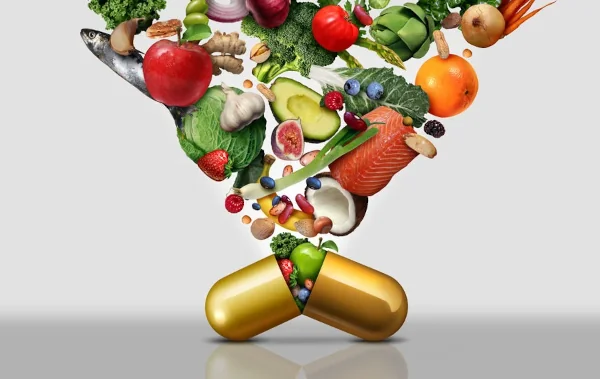
No US health agency or professional body advises everyone to take a multivitamin, and it cannot replace a varied diet (NIH ODS). People who take one already tend to eat better than those who don’t. The groups NIH names as more likely to benefit:
- Anyone who could become pregnant: 400 mcg of folic acid a day, from at least a month before conception (USPSTF: 400-800 mcg). In pregnancy, a prenatal.
- Adults over 50: B12 from supplements or fortified foods, because absorption from food falls with age (NIH).
- Vegans and vegetarians, mainly for B12.
- Restricted diets and gut problems: low-calorie diets, conditions that impair absorption, and gut surgery such as weight-loss surgery.
- Long-term users of PPIs or metformin, which can lower B12 absorption.
A multivitamin has no dose of its own: the label is the dose. The risk is exceeding upper limits when it is stacked with single supplements and fortified foods (NIH). Adult upper limits for the nutrients most often over-supplied:
| Nutrient | Upper limit | Watch for |
|---|---|---|
| Vitamin A (retinol) | 3,000 mcg | Retinol only, not beta-carotene. Excess in pregnancy can cause birth defects. |
| Iron | 45 mg | Some prenatals reach it alone. Overdose is a leading cause of fatal poisoning in children under 6. |
| Zinc | 40 mg | Set to protect copper status. O.N.E. alone has 25 mg. |
| Folic acid | 1,000 mcg | Counts supplements and fortified foods only. US prenatals typically have 800-1,000 mcg. |
| Vitamin D | 4,000 IU | Huberman’s separate 5,000-10,000 IU plus his multi and AG1 is well above it. |
| Niacin | 35 mg | From supplements; set on flushing. About half or more of multi users in one large study went over. |
Doses are what studies and experts used, not advice for you. See the medical disclaimer.
Cautions NIH lists for multivitamins:
- Warfarin. Ask the doctor before any product with vitamin K, which reduces the drug’s effect. NIH calls this the one important exception.
- Smokers and former smokers should avoid products high in beta-carotene or vitamin A. Two trials found more lung cancer (ATBC, CARET). The label shows how much of the vitamin A comes from beta-carotene.
- Other medicines. The single-nutrient fact sheets list iron and calcium with levothyroxine, and zinc and calcium with some antibiotics. At multivitamin doses this is an inference, not a listed interaction: ask the pharmacist about spacing.
How to choose a product
The FDA does not approve supplements before they are sold, and the manufacturer decides how much of each nutrient goes in (FDA). A USP Verified mark means the product was tested to contain what the label says, without harmful levels of heavy metals and pesticides. Hyman also points to NSF marks.
- Check the %DV column. Values far above 100% are the high-potency type. Add up vitamin A, iron, zinc, folic acid, vitamin D and niacin across everything you take.
- Expect gaps. Many multis have little calcium, magnesium or potassium.
- Avoid proprietary blends for anything that matters: the label does not have to give amounts for ingredients inside a blend (FDA).
Roundup
If you have any questions or comments, please leave them below.
Disclaimer: The above information is for research and educational purposes only and not a substitute for professional medical advice. See full medical disclaimer.
Note: We have no affiliation with the experts listed here - this page is based on publicly shared information.