Last reviewed September 2026
Most experts take: 2,000-10,000 IU of D3 a day, often with K2, and most check their blood levels.
Best evidence: Fewer respiratory infections at modest daily doses, and fewer autoimmune diagnoses at 2,000 IU a day in one large trial.
Weakest evidence: Bones, falls, heart disease, mood and testosterone in people who are not deficient.
More likely to benefit: Older, housebound and obese adults, darker-skinned people living far from the equator, people who absorb fat poorly, and everyone over 75.
On this page: Which form · What the experts take · Taken for vs shown to do · Do you need it? · Dose and blood levels · How to choose
Which form to buy
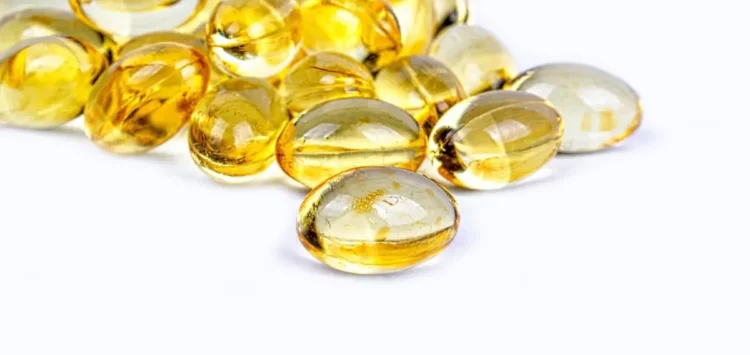
Both forms are well absorbed, but D3 raises blood levels more and keeps them up longer than D2 (NIH ODS). Every expert here who names a form takes D3. The format matters less than taking it with a meal that contains fat.
| Form | Pick it for | Note |
|---|---|---|
| D3 (cholecalciferol) – best studied | Most people | The form used in most trials. Usually made from lanolin; vegan D3 from lichen exists. In a Cochrane review, only D3 was linked to lower mortality, not D2. |
| D3 + K2 combination | Convenience | Common pairing (Patrick, Hyman, Brecka, Bredesen). No authority says D3 needs K2. Anyone on warfarin needs to keep vitamin K intake steady (NIH). |
| Liquid drops | Small or adjustable doses | No study compares drops with capsules. |
| D2 (ergocalciferol) | Vegan diets | Made from yeast. Raises blood levels less than D3. Nobody on this list takes it. |
Dose per capsule. Labels run from 400 to 10,000 IU. A daily 5,000 IU capsule is above the 4,000 IU adult upper limit on its own; 1,000 or 2,000 IU capsules make it easier to land near the RDA or the 2,000 IU used in the largest trial.
What the experts take
Every linked row goes to the Fast Life Hacks article that documents it, with the podcast or video source. 1 mcg = 40 IU.
| Expert | Dose a day | K2 | Blood target | Brand |
|---|---|---|---|---|
| Andrew Huberman | 5,000-10,000 IU | Yes, dose not stated | Says his levels are in range | Not stated |
| Rhonda Patrick | About 6,000 IU (4,000 IU plus 2,000 IU in her multivitamin), in the evening | 100 mcg MK-7, same capsule | 40-60 ng/mL | Pure Encapsulations |
| Peter Attia | About 5,000 IU | Not stated | 40-60 ng/mL | Not stated |
| Bryan Johnson | 2,000 IU, in his multivitamin, in the morning with food | MK-4 5 mg + MK-7 600 mcg (Advanced Antioxidants) | Not stated | Blueprint (own brand) |
| David Sinclair | At least 2,000 IU | Yes, dose not stated | Not stated | Not stated |
| Joe Rogan | 5,000 IU (2020) | Not stated | Not stated | Solgar (2011 video) |
| Stacy Sims | At least 2,000 IU every other day, more in winter, with a meal | Not stated | Adjusts by blood test | Momentous |
| Gary Brecka | 5,000 IU with meals | 80-120 mcg | 60-80 ng/mL | Not stated |
| Mark Hyman | 5,000 IU (his own product), with fat | Vitamin K in the product | 40-60 ng/mL | Designs for Health |
| Dale Bredesen | 2,500 IU to start (in his protocol) | 100 mcg MK-7 | 50-80 ng/mL | Not stated |
| Eric Berg | 8,000-10,000 IU | Not stated | Not stated | Not stated |
Taken for vs shown to do
Most of the large trials enrolled people who were not deficient.
| Outcome | Who takes it for this | What the trials show |
|---|---|---|
| Colds and chest infections | Huberman, Brecka, Hyman | ✅ Small benefit. A 2021 meta-analysis of 43 trials (48,488 people) found slightly fewer infections, seen with daily doses of 400-1,000 IU, not with large occasional doses. |
| Autoimmune disease | Berg, Hyman | ⚠️ Possible, one trial. In VITAL, 2,000 IU a day for about 5 years gave 22% fewer confirmed autoimmune diagnoses, a borderline result. Berg’s doses were not tested. |
| Cancer | Nobody on this list | ⚠️ No effect on getting cancer. VITAL found no difference in new cancers. A 2019 meta-analysis found about 13% fewer cancer deaths, mostly with daily dosing. |
| Bones and falls | Sims, Brecka | ❌ No effect in people who are not deficient: no fewer fractures in VITAL (25,871 adults), and no fewer fractures or falls in a 2018 meta-analysis of 81 trials. |
| Heart disease | Brecka, Patrick, Sinclair (via K2) | ❌ No clear effect. No difference in heart attacks, strokes or heart deaths in VITAL; a small, uncertain difference in D-Health. |
| Living longer | Johnson, Huberman | ❌ No clear effect. A 2019 meta-analysis of 52 trials found no change in deaths from all causes. |
| Mood and depression | Sims, Brecka | ❌ No prevention effect. VITAL-DEP (18,353 adults, 2,000 IU) found no difference in depression or mood. |
| Testosterone | Huberman | ❌ No effect in healthy men (2017 trial). |
| K2 for arteries | Huberman, Patrick, Brecka, Sinclair | ❌ Not shown. In a 2-year trial of 365 men, MK-7 with vitamin D did not slow calcification of the heart valve, aorta or coronary arteries. |
Do you need it?
Most Americans get less than the RDA from food, but far fewer are low on a blood test: about 5% are at risk of deficiency (NIH ODS). NIH lists these groups as at risk of low levels:
- Older adults and people who are housebound or get little sun.
- People with darker skin, especially far from the equator, where the sun is weaker for much of the year.
- Obesity (BMI 30+) and after gastric bypass.
- Conditions that limit fat absorption, such as Crohn’s, celiac disease, cystic fibrosis and ulcerative colitis.
- Breastfed infants, and vegans or people who avoid milk.
The Endocrine Society 2024 guideline suggests taking more than the RDA, without testing first, only for ages 1-18, adults over 75, pregnancy and high-risk prediabetes. It suggests against it for healthy adults under 75, and against routine blood tests, saying no target level has been established. Every expert here who gives a target tests; guideline bodies do not ask healthy adults to. Inference: a test makes most sense for people in an at-risk group or taking more than 4,000 IU a day.
Dose and blood levels
Figures from NIH ODS:
| Figure | Note | |
|---|---|---|
| RDA | 600 IU (15 mcg); 800 IU over 70 | Set for bone health, assuming little sun. |
| Upper limit | 4,000 IU (100 mcg) | Adults, including pregnancy. Most of the experts above take more. |
| Largest trial dose | 2,000 IU a day | VITAL, 25,871 adults, about 5 years. |
| Blood level: adequate | 20 ng/mL (50 nmol/L) or more | Adequate for most people (Food and Nutrition Board). |
| Blood level: too high | Above 50 ng/mL (125 nmol/L) | Linked to possible harm, especially above 60. Every expert target above reaches this range. |
| When | With a meal | Fat in the gut helps absorption. No guidance on time of day. |
Doses are what studies and experts used, not advice for you. See the medical disclaimer.
Higher is not better for bone. In a 3-year trial of 311 healthy adults, 4,000 and 10,000 IU a day gave lower bone density at the wrist than 400 IU.
Medicines. NIH lists interactions with orlistat, statins, steroids such as prednisone and thiazide diuretics (risk of high calcium). Warfarin users should keep vitamin K steady, which matters for D3 + K2 products (NIH). Vitamin D taken with calcium supplements raises the risk of kidney stones.
How to choose a product
- Read the mcg figure. US labels must list vitamin D in mcg; 125 mcg is 5,000 IU, above the upper limit.
- Add up every source. Many multivitamins already have 1,000-2,000 IU, and some D3 + K2 products bundle vitamin K1 as well.
- Check the K2 type in combination products: MK-7 is dosed in mcg, MK-4 in mg.
- Look for a USP or NSF mark. Reported cases of vitamin D toxicity have come from manufacturing errors (NIH).
Reputable brands of vitamin D include:
Roundup
If you have any questions or comments, please leave them below.
Disclaimer: The above information is for research and educational purposes only and not a substitute for professional medical advice. See full medical disclaimer.
Note: We have no affiliation with the experts listed here - this page is based on publicly shared information.