Rhonda is currently experimenting with taking beta glucans, sourced from Barley, in order to reduce her body’s burden of PFAS chemicals (mentioned in Q&A #81 & #82).
As a reminder, PFAS are a group of over 10,000 synthetic chemicals, also known as “forever chemicals,” which can accumulate in the body.
This PFAS reduction strategy stems from early research suggesting a possible effect – which we’ll explore further below.
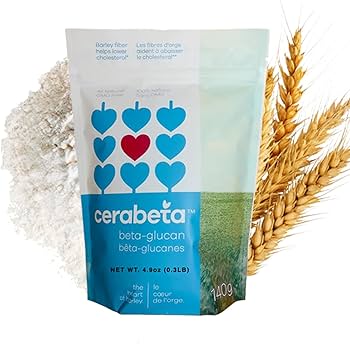
Rhonda specifically mentions taking Cerabeta beta-glucan barley.
Dose: 3 g/day, as 1g x 3 servings spaced ~3 hours apart. This matches the dose used in the Schlezinger human trial below.
Further notes:
- Barley beta-glucan is not gluten-free, celiacs may opt instead for gluten-free oat beta glucans.
- She was previously using psyllium husk with similar intentions, however it required 7-10g as opposed to the 3g of beta glucan.
It’s worth noting that Cerabeta’s beta glucans come from Barley, whereas those in the studies below came from oats.
Rhonda says she chose Cerabeta due to its organic, glyphosate-free source.
The Research
The research into this subject area is still in its infancy, but below are two of the key papers:
- Schlezinger et al. 2025 (Environ Health, human): A secondary analysis of serum from a Canadian cholesterol trial – 72 per-protocol male participants, 3 g/day oat β-glucan (or brown rice control) before meals for 4 weeks, 17 PFAS measured. Total PFAS fell in both groups with no difference between them, but the seven NASEM-priority long-chain PFAS dropped significantly only in the β-glucan arm, apparently driven by PFOA and PFOS.
- Bello/Schlezinger group (Tox Appl Pharmacol, mouse): Male C57Bl/6J mice, 7 PFAS in drinking water, fed oat β-glucan vs. inulin (a fermentable but non-gelling fiber) for 6 weeks. β-glucan-fed mice showed lower serum PFHpA, PFOA and PFOS – but only at p < 0.1, a trend, not significance – plus lower adipose:body weight ratios and liver/jejunum triglycerides.
Roundup & Further Reading
Above we’ve explored Rhonda’s use of beta glucans. Please leave any questions or comments below.
If you enjoyed this article, you may also enjoy:
- A relatively comprehensive list of supplements that Rhonda has discussed taking, some daily, some for specific use-cases (link)
- A detailed post on Rhonda’s diet – including examples of her breakfast, lunch and dinner (link)
Disclaimer: The above information is for research and educational purposes only and not a substitute for professional medical advice. See full medical disclaimer.
Note: We have no affiliation with Rhonda Patrick - this article is based on publicly shared information.