In this article we’ll look at Mark Hyman’s six daily foundational supplements and the supplements he takes for potential longevity benefits.
Looking at the doses he uses, how judges supplement quality and evaluating the evidence base behind his choices.
TLDR: Mark Hyman Supplement Protocol
- Daily base: Multivitamin, fish oil, vitamin D3, magnesium, a probiotic and creatine. He calls the first five his Foundational Five.
- Personal Stack: A 13-product collection customised for him. It adds NMN, urolithin A, ubiquinol and a senolytic blend on top of the base. Additionally C15:0, delivering 100mg of pentadecanoic acid.
- How he picks supplements: Third-party certification, lot-level Certificates of Analysis, bioavailable forms, and no titanium dioxide or synthetic dyes.
Mark Hyman’s Foundational Five
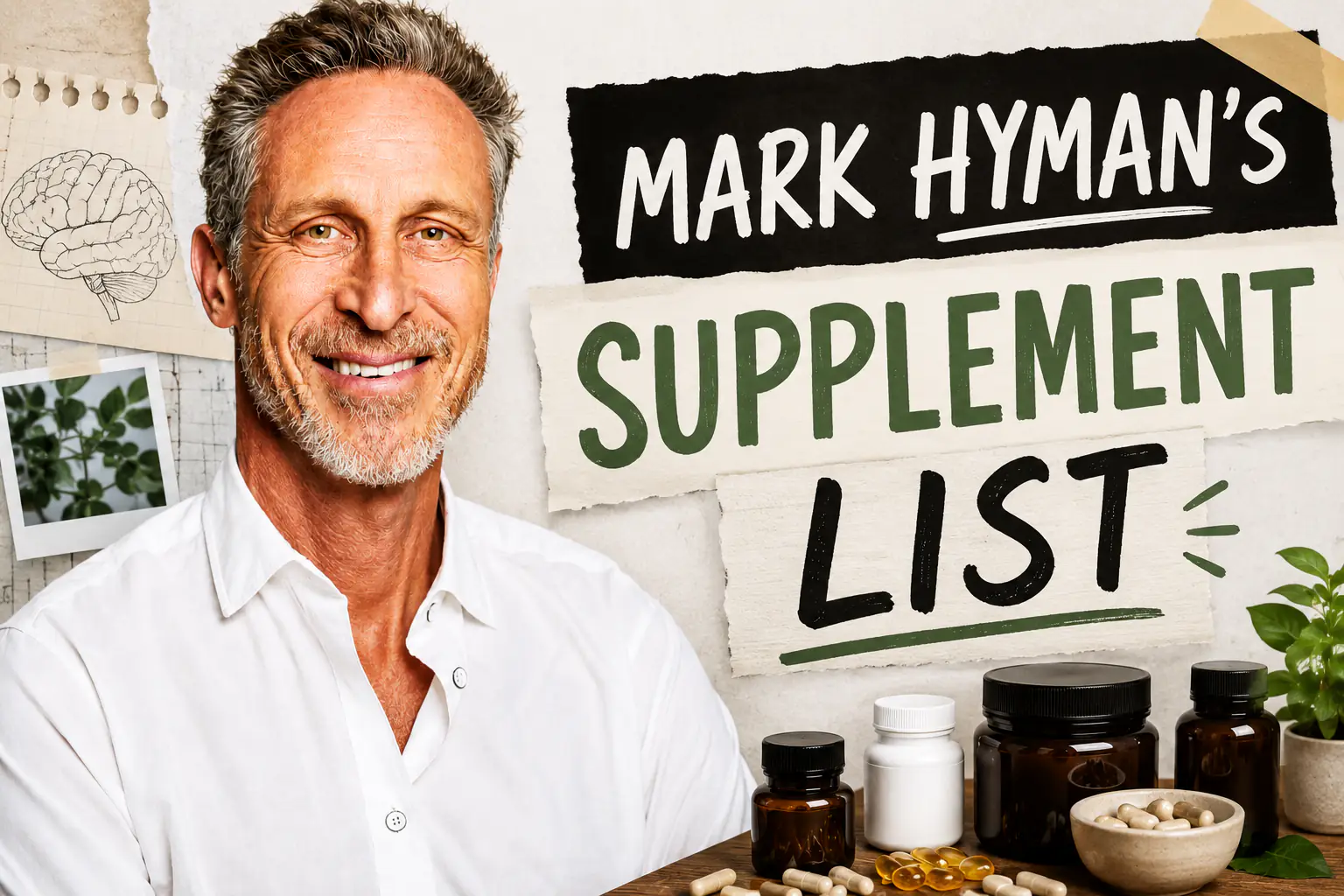
In this video, summarized below, Mark Hyman covers the five supplements he takes and suggests are useful for most people.
His case for a baseline of supplementation rests on how common micronutrient shortfalls are.
Hyman puts the share of Americans falling short on vitamin D at up to 95%, and treats a shortfall as the normal state rather than the exception (source).
That figure holds up. An analysis of NHANES dietary data covering 26,282 US adults found 95% falling below the estimated average requirement for vitamin D, alongside 84% for vitamin E, 46% for vitamin C, 45% for vitamin A and 15% for zinc.1Inadequacy of Immune Health Nutrients: Intakes in US Adults, the 2005–2016 NHANES | Reider et al. | 2020 | Nutrients
Hear him name his actual daily stack here. This clip starts at ≈21:37.
Multivitamin
Mark Hyman points to two different multivitamins.
- O.N.E. Multivitamin by Pure Encapsulations, one capsule a day (source)
- Twice Daily Multi by Designs for Health, one capsule twice a day (source)
He never names a brand when he talks about multivitamins himself, so both product names come from his store rather than from anything he has said directly.
The logic here is insurance rather than targeting. A multivitamin is not doing any one job especially well, it is covering small shortfalls across dozens of nutrients at once, which is why he treats it as a “safety net” rather than a treatment for anything specific. Where he is most confident it earns its place is with older adults, vegans and vegetarians, and anyone whose diet is constrained by illness or restriction (source).
The evidence he leans on is a two-year randomised controlled trial in 573 older adults, which found daily multivitamin use produced modest gains in global cognition against placebo. Pooled with two further trials in the same programme, covering more than 5,000 people, the benefit held for both global cognition and episodic memory.2Effect of multivitamin-mineral supplementation versus placebo on cognitive function | Vyas et al. | 2024 | American Journal of Clinical Nutrition
Worth keeping the scale in mind. This was measured in older adults, on memory and thinking tests. The 573-person trial on its own was too small to prove much, and the result only holds up once all three trials are combined. The effect looks real, but it is a small one.
Further multivitamins worth considering:
- Thorne Basic Nutrients – NSF Contents Certified
- Momentous Multivitamin – NSF Certified for Sport
- Nutricost Multivitamin – Lower cost, men’s formula
Fish Oil
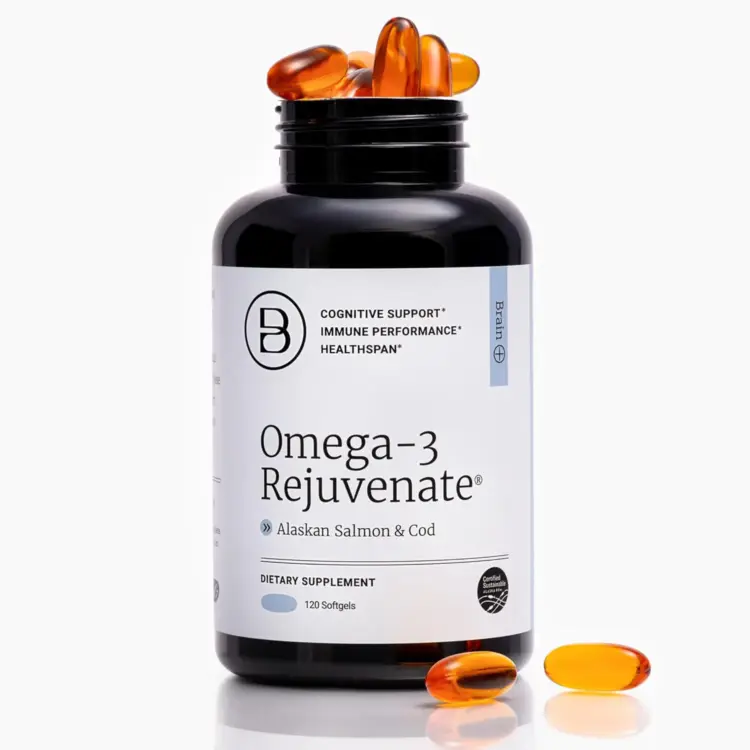
His product is Omega-3 Rejuvenate by Big Bold Health, two softgels per day at 593mg omega-3 per serving. His general guidance sits higher, at 1,000-2,000mg of actual EPA and DHA per day, rising to 3,000mg where inflammation, cardiovascular or cognitive concerns are the target (source).
Here are some common fish oil options you can check out:
| Name | Price | Flavored? | Quantity | EPA/DHA | Total Oxidation* | Heavy Metals* | IFOS Test |
| Metagenics OmegaGenics EPA-DHA 1000 | $48.75 | Lemon | 60 softgels | 681 / 470 mg | 7.81 | Passed | Link |
| Viva Naturals Triple Strength | $16.99 | Unflavored | 30 soft gels | 1500 / 570 mg | 7.39 | Passed | Link |
| Carlson Maximum Omega 2000 | $65.37 | Lemon Flavor | 120 soft gels | 668 / 284 mg | 5.04 | Passed | Link |
| $40 | Lemon Flavor | 60 soft gels | 375 / 375 mg | No data** | No data** | N/A** |
The gap between those two numbers is worth understanding. The 593mg figure is a serving size on a product he sells, while the 1-2 gram figure is the daily intake he treats as the real target. Both are legitimately his, they just describe different things. For vegans and vegetarians he points to algae-derived DHA and EPA at 1-2g per day instead.
These are some top-quality vegan omega-3 options:
| Name | Price | Quantity | Flavored? | EPA/DHA $/gram |
| Source Naturals - Non-Fish Omega-3s | $9.23 | 30 soft gels | Sorbitol sweetener | $3.35 / $1.67 |
| Sun Warrior - Algae-Based Omega-3 | $38.97 | 60 soft gels | Maltitol sweetener | $11.48 / $2.59 |
| Deva - Vegan Omega-3 | $32 | 60 soft gels | Vegetable glycerin | $3.55 / $1.77 |
His mechanism argument is that the brain is roughly 60% fat and 30% omega-3 fats, which is why he treats a shortfall here as a brain problem rather than a heart problem alone (source).
Vitamin D3
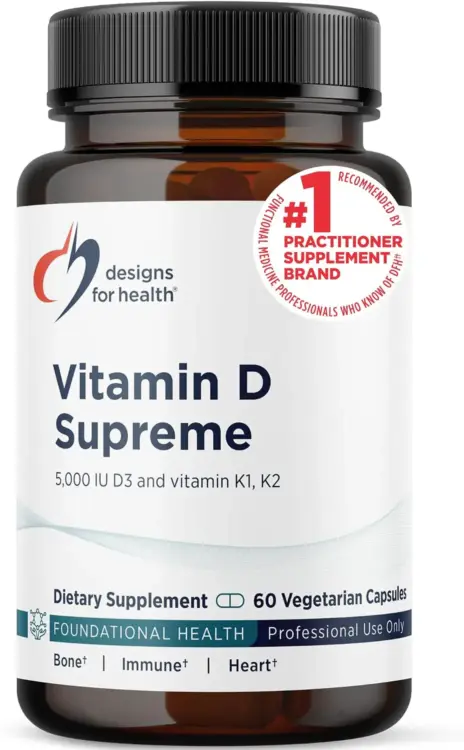
His vitamin D numbers move depending on whether he is describing a product, a general range or a short-term protocol.
- General range: 1,000-5,000 IU per day, with some people needing 10,000 IU
- His own product: 5,000 IU, the dose in Vitamin D Supreme by Designs for Health and the figure in his foundational supplements guide. Their D3 formulation is paired with vitamin K1 and K2.
- Short-term loading: 10,000-20,000 IU per day for one to three weeks
- Blood level target: 40-60 ng/mL
(source)
He specifies D3 rather than D2, and taking it with fat, since absorption drops on an empty stomach. He describes vitamin D as an anti-inflammatory that is central to immune function.
Author’s note: The 10,000 IU ceiling and the loading protocol are the parts of his vitamin D guidance where the evidence pushes back. A three-year randomised trial in 311 healthy adults compared 400, 4,000 and 10,000 IU per day and found bone density at the radius fell further as the dose rose, with no offsetting gain in bone strength. 3Effect of High-Dose Vitamin D Supplementation on Volumetric Bone Density and Bone Strength | Burt et al. | 2019 | JAMAThat trial tested years of daily dosing rather than a one-to-three-week load, so it does not speak directly to loading. What it does show is that more is not reliably better once levels are already adequate, which reinforces the testing-first position he takes elsewhere.
Vitamin D3 options to consider:
- Momentous Vitamin D3 – 5,000 IU per capsule
- Thorne Vitamin D3 – 1,000 IU per capsule
- Solaray Vitamin D3 – Paired with K2
Magnesium
Mark Hyman suggests 400-500mg of magnesium a day from supplements, and glycinate is the form he favours. He names two glycinate products.
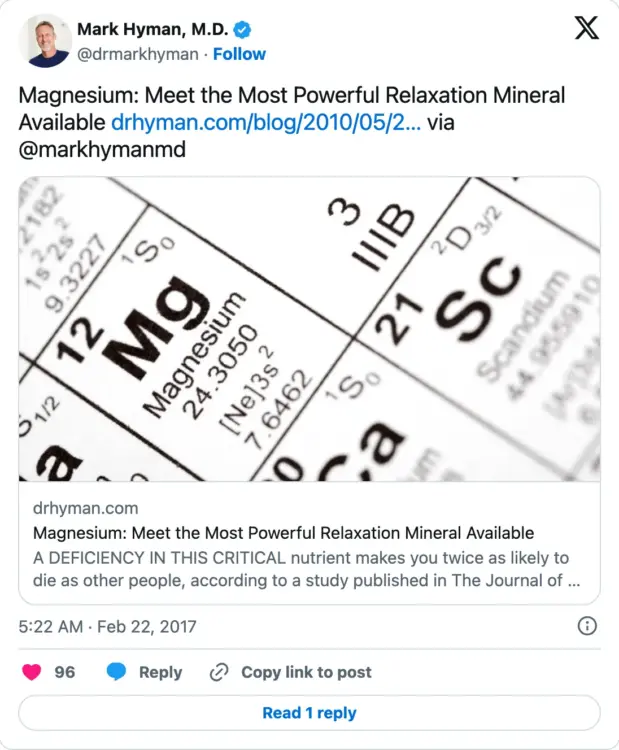
Source: @drmarkhyman on X
- Magnesium Glycinate by Pure Encapsulations: 120mg a capsule, at two to four capsules a day, so 240-480mg (source)
- Magnesium Glycinate Complex by Designs for Health: 150mg a capsule, at a stated serving of two capsules, so 300mg a day
To reach 400-500mg you would need four capsules of the Pure Encapsulations product.
Reputable magnesium glycinate options include:
- Solaray Magnesium Glycinate – Enhanced absorption, 350mg
- Metagenics Magnesium Glycinate – Calm and sleep support
- Life Extension Magnesium Glycinate – Heart and bone support
Citrate is the exception he makes to glycinate. For constipation he points to magnesium citrate at 150-300mg a day, short term, because of its mild laxative effect (source).
Magnesium oxide gets short shrift from him. After back surgery a hospital doctor prescribed him magnesium oxide for constipation and he pushed back on the spot, arguing it is poorly absorbed and does not work well for the thing it was prescribed for. He asked for magnesium citrate instead, and treats oxide as a form to skip entirely when it turns up on a label (source).
Listen to the hospital magnesium oxide story here. This clip starts at ≈1:08.
He cites research on magnesium and blood sugar, and it holds up. A randomised trial in people with type 2 diabetes found 250mg of magnesium daily for three months lowered HbA1c from 8.32% to 7.96%.4The Effects of Oral Magnesium Supplementation on Glycemic Response among Type 2 Diabetes Patients | ELDerawi et al. | 2019 | Nutrients That was a diabetic population rather than a healthy one, so it reads as a treatment finding rather than a general case for supplementing.
He also describes a patient whose debilitating migraines resolved once a magnesium deficiency was corrected (source). That is a single case he recounts rather than a dose he suggests generally, and the figure shifts slightly each time he tells it.
Underpinning all of it is that magnesium acts as a cofactor in over 600 enzyme reactions, which is the basis for his claim that a shortfall touches every biological system.5Magnesium in Man: Implications for Health and Disease | de Baaij et al. | 2015 | Physiological Reviews
Probiotic
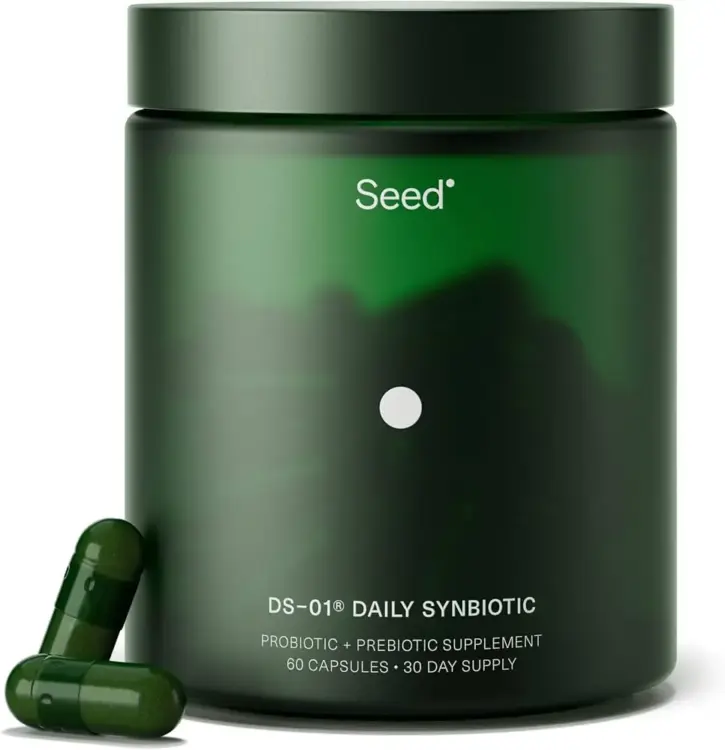
Mark Hyman takes Seed DS-01 Daily Synbiotic at two capsules per day, delivering 53.6 billion AFU across 24 strains. His stated reasons are digestion, occasional bloating, and nutrient absorption.
This is the thinnest-argued item in the five, and he hedges it himself, describing probiotics as probably worth taking for most people rather than clearly necessary for everyone.
Well regarded probiotic brands include:
- NOW Foods Probiotic – 25 billion CFU, 10 strains
- Life Extension Digestive Enzymes – With probiotics added
Creatine
Creatine is the sixth item in his daily list, sitting alongside the Foundational Five rather than inside it. Mark Hyman takes it every day and frames muscle as the primary reason (source). He does not give a personal dose. The standard maintenance intake in the sports-nutrition literature is 3-5g per day6International Society of Sports Nutrition Position Stand: Safety and Efficacy of Creatine Supplementation in Exercise, Sport, and Medicine | Kreider et al. | 2017 | Journal of the International Society of Sports Nutrition, and our breakdown of Rhonda Patrick’s creatine protocol covers dosing and brand selection in more detail.
His argument runs wider than gym use (source).
- Sarcopenia and fall risk: The main reason he raises creatine outside athletic contexts
- Insulin sensitivity: Particularly in sedentary people and those with metabolic dysfunction
- Cognition: Framed as cellular energy rather than muscle
- Mood: He puts the link at a 50% lower risk of depression
Author’s note: The 50% comes from a study of creatine in food rather than supplements, and the difference it found was closer to 30%.7Dietary Creatine Intake and Depression Risk among U.S. Adults | Bakian et al. | 2020 | Translational Psychiatry
Some reputable creatine brands:
- Thorne Creatine – Micronized monohydrate powder
- Momentous Creatine – Chews, 5g per serving
- Nutricost Creatine – Capsule form
Mark Hyman’s Personal Stack
“Mark’s Personal Stack” is a product collection customised for Mark Hyman, each item carrying a listed serving size and a one-line rationale. The foundational items appear here too, so what is actually distinctive is the longevity layer sitting on top of them.
- Wonderfeel Youngr NMN: 900mg per serving, aimed at energy, cognition and cellular aging. He gives no personal dose separate from the product’s serving size
- Renual: A Pure Encapsulations formula built around Mitopure urolithin A, at 250mg per two capsules, with trans-resveratrol and CoQ10 alongside it
- CoQnol 200: A ubiquinol product at 200mg per serving
- Senolytic Synergy: Two capsules per serving, combining curcuminoids, quercetin, red grape powder, fisetin and Senactiv, aimed at clearing senescent cells
- Athletic Pure Packs: One packet daily
- Turiva: 500mg turmeric per capsule, for the anti-inflammatory case
- Homocysteine Supreme: Two capsules, for B6, B12 and folate methylation support
- HTB Rejuvenate and Microbiome Rejuvenate: Two capsules each, for phytonutrient and microbiome support
Author’s note: The energy, cognition, mitophagy and senescent-cell claims attached to this tier describe mechanisms rather than demonstrated results, which is a meaningful difference. A review of the human trials reports that NMN raises NAD+ levels and is well tolerated, but those trials are short and track biomarkers rather than health outcomes.8The Safety and Antiaging Effects of Nicotinamide Mononucleotide in Human Clinical Trials: an Update | Song et al. | 2023 | Advances in Nutrition The senolytic evidence most often cited comes from nine people over eleven days, using a prescription cancer drug alongside quercetin rather than an off-the-shelf capsule.9Senolytics Decrease Senescent Cells in Humans: Preliminary Report from a Clinical Trial of Dasatinib Plus Quercetin in Individuals with Diabetic Kidney Disease | Hickson et al. | 2019 | eBioMedicine Mark Hyman presents this layer as optimisation rather than foundation, which is a fair description. It does mean the six foundational supplements carry considerably more evidence behind them than anything stacked on top.
His own quality filters matter more than usual in this category. An independent analysis of 22 NMN products found 14 of them contained less than 1% of the NMN stated on the label, which we cover in our NMN product analysis.
The ubiquinol has a practical reason for being there. Statins work by blocking an enzyme that also sits upstream of the body’s own CoQ10 production, so anyone taking one is suppressing CoQ10 at the same time as cholesterol. His point is that the muscle aches statin users often report can trace back to exactly that, and it is rarely raised in a standard consultation (source).
He also takes glutathione, which he calls “the master detoxifier, the master antioxidant, the master immune regulator” (source). He takes it in liposomal form because ordinary oral glutathione is broken down in digestion, and pairs it with his sauna sessions. The version he stocks is Glutathione Cell Defense, a stabilised reduced glutathione formula with anthocyanins and L-cysteine.
Watch the sauna-side glutathione clip here.
For a comparison against another public longevity stack built on similar NAD and senolytic thinking, our breakdown of David Sinclair’s supplements covers much of the same ground at a very different intensity.
C15:0
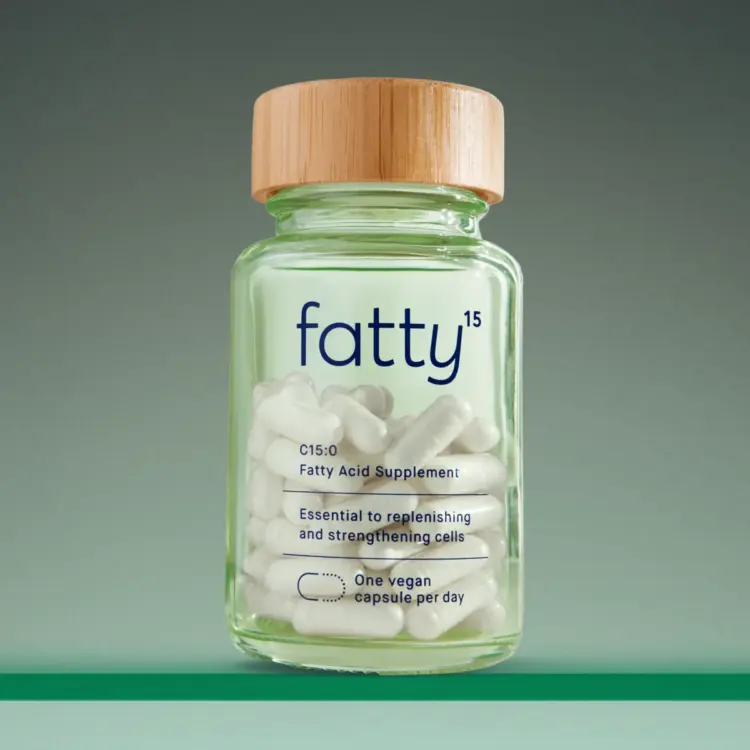
One supplement Mark Hyman takes does not appear on his own Personal Stack collection (source).
The dose is one capsule per day of Fatty15, delivering 100mg of pentadecanoic acid. It is marketed as the first new essential fatty acid discovery since omega-3, with AMPK and mTOR mechanism claims attached.
Author’s note: That “first essential fatty acid since omega-3” framing is a proposal rather than a settled classification. The paper that advanced it carries the question mark in its own title, states that further studies are needed to confirm the hypothesis, and its lead author is affiliated with the company that sells the supplement.10Efficacy of Dietary Odd-Chain Saturated Fatty Acid Pentadecanoic Acid Parallels Broad Associated Health Benefits in Humans: Could It Be Essential? | Venn-Watson et al. | 2020 | Scientific Reports The observational link between higher C15:0 blood levels and better metabolic markers is genuine, but the step from that to a capsule delivering the same benefit is the part still being tested.
How Mark Hyman Picks Supplements
This is arguably the most portable part of his approach. His starting position is blunt. “A lot of the supplements on the market are just crap,” he says, and the category is barely regulated (source). The filters he applies are below.
- Third-party certification: He points to NSF International, USP and ConsumerLab (source). The first two certify, so their mark appears on the label. ConsumerLab tests products independently and publishes the results to subscribers, so you look those up rather than find them on the bottle
- Lot-by-lot testing: Some brands test every batch and throw out any that do not match the label. He points to Pure Encapsulations here, where a magnesium batch labelled at 400mg that comes back at 350mg gets discarded rather than sold (source)
- Bioavailable forms: Citrate or glycinate over magnesium oxide, and D3 over D2
- No unnecessary fillers or dyes: Titanium dioxide, Red 40 and Yellow 5. His shorthand for spotting a poor multivitamin is colour, since a brightly coloured tablet is carrying dye it does not need
Those four are label checks a reader can do with the bottle in hand. Counterfeit and degraded stock is the other half of the problem, which our comparison of buying supplements on Amazon versus iHerb covers in detail.
His last criterion is not a label check. He sums it up as “test, don’t guess” (source), the argument being that supplementing without knowing your levels is guesswork. That is a defensible position and also a commercial one, since he is Chief Medical Officer of Function Health, which sells the biomarker panel he points to.
Catch the blunt take on supplement quality here.
Roundup
The short version is that what Mark Hyman takes daily and what he suggests for everyone else are the same six things. Those are a multivitamin, fish oil, vitamin D3, magnesium glycinate, a probiotic, and creatine.
Everything else is optional. The Personal Stack collection and Fatty15 sit on top of that base, and the evidence behind them is much weaker.
Where his numbers move, on vitamin D between 1,000 and 5,000 IU and magnesium between 400 and 500mg, the variance is real rather than a reporting error. He speaks at product-serving level and at daily-target level, and the two do not always match.
Any questions or comments on Mark Hyman’s supplement stack, please leave them below.
Further Reading
If you found this post on Mark Hyman’s supplement list helpful, you may also like:
- Bryan Johnson Supplement List – A longevity-driven routine of roughly 40 daily supplements, built around biomarker tracking and measured rates of aging.
- Gary Brecka Supplement List – A gene-testing led approach centred on methylation, targeted deficiencies and a short list of foundational nutrients.
- Joe Rogan Supplement List – A performance-focused stack covering recovery, joint health, cognitive support and hormone maintenance.
- Rhonda Patrick Supplement List – A micronutrient-first protocol organised by time of day, with brands and dosing rationale for each item.
- Andrew Huberman Supplement List – A much larger stack organised by goal, spanning sleep, focus, hormone support and foundational health.
FAQs
Mark Hyman names six. A multivitamin, fish oil, vitamin D, magnesium, a probiotic and creatine, which he describes as the ones he takes every single day (source). On top of that base he adds longevity products including NMN, urolithin A, ubiquinol, a senolytic blend and C15:0.
He calls it the Foundational Five, made up of a multivitamin and mineral, vitamin D3, magnesium, omega-3 fats, and a probiotic. Creatine is the add-on he names alongside it, mainly for muscle preservation with age (source).
Not a single own-label brand. Mark Hyman curates and sells third-party products through drhyman.com, including a 13-item collection marketed as “Mark’s Personal Stack”, drawing on brands such as Pure Encapsulations, Designs for Health, Big Bold Health and Seed.
His general figure is 1,000-5,000 IU of vitamin D3 per day, noting some people need 10,000 IU, with a target blood level of 40-60 ng/mL (source). His own product is dosed at 5,000 IU.
Magnesium glycinate. He suggests 400-500mg a day from supplements, and names two glycinate products. Pure Encapsulations at 120mg a capsule, two to four capsules a day (source), and Designs for Health Magnesium Glycinate Complex at 300mg per two-capsule serving. For constipation he switches to citrate at 150-300mg for a short time.
Thumbnail image: “Mark Hyman” by Stephanie Williams, modified, licensed under CC BY-SA 4.0.
References
- 1Inadequacy of Immune Health Nutrients: Intakes in US Adults, the 2005–2016 NHANES | Reider et al. | 2020 | Nutrients ↩︎
- 2Effect of multivitamin-mineral supplementation versus placebo on cognitive function | Vyas et al. | 2024 | American Journal of Clinical Nutrition ↩︎
- 3Effect of High-Dose Vitamin D Supplementation on Volumetric Bone Density and Bone Strength | Burt et al. | 2019 | JAMA ↩︎
- 4The Effects of Oral Magnesium Supplementation on Glycemic Response among Type 2 Diabetes Patients | ELDerawi et al. | 2019 | Nutrients ↩︎
- 5Magnesium in Man: Implications for Health and Disease | de Baaij et al. | 2015 | Physiological Reviews ↩︎
- 6International Society of Sports Nutrition Position Stand: Safety and Efficacy of Creatine Supplementation in Exercise, Sport, and Medicine | Kreider et al. | 2017 | Journal of the International Society of Sports Nutrition ↩︎
- 7Dietary Creatine Intake and Depression Risk among U.S. Adults | Bakian et al. | 2020 | Translational Psychiatry ↩︎
- 8The Safety and Antiaging Effects of Nicotinamide Mononucleotide in Human Clinical Trials: an Update | Song et al. | 2023 | Advances in Nutrition ↩︎
- 9
- 10Efficacy of Dietary Odd-Chain Saturated Fatty Acid Pentadecanoic Acid Parallels Broad Associated Health Benefits in Humans: Could It Be Essential? | Venn-Watson et al. | 2020 | Scientific Reports ↩︎
Disclaimer: The above information is for research and educational purposes only and not a substitute for professional medical advice. See full medical disclaimer.