Ketamine has become an increasingly popular treatment option for people struggling with depression and anxiety.
Originally developed as an anesthetic, ketamine was found to have rapid antidepressant effects in studies beginning in the 1990s.1Ketamine—50 years in use: from anesthesia to rapid antidepressant effects and neurobiological mechanisms | Kohtala | 2021 | Pharmacological Reports
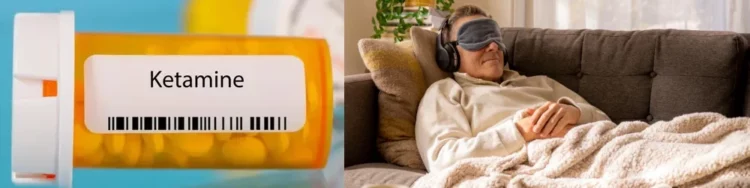
Mindbloom offers at-home ketamine therapy through a clinician-guided model.
We’ll examine how Mindbloom’s service works, including the prescription process, medication delivery, and optional integration therapy.
We’ll also overview the pros and cons, including accessibility, pricing confusion, and safety oversight concerns.

How Mindbloom’s Ketamine Therapy Works
Mindbloom’s ketamine therapy process involves a few key steps – let’s look into them one by one!

Initial Consultation and Prescription
The first step is a consultation with a licensed Mindbloom clinician to determine if ketamine therapy is suitable for you.
They review your health history and symptoms to create a personalized treatment plan.
If it’s determined you’re not a candidate, you receive a full refund.
If cleared to proceed, you’ll be prescribed a personalized starting dose of ketamine based on factors like your weight, medication sensitivity, and severity of symptoms.
Dosing
Tablets
Mindbooom’s starting dose for tablets is typically 5 mg per kilogram of bodyweight, and titrated up or down based on discussion with their clinician. The source for this is their 2022 study.
The first dose appears to be intentionally conservative. Online sources (such as this review video) commonly report that the week 1 dose is too small.
However, some people are extremely sensitive to compounds like ketamine, and therefore the goal is to ovoid overwhelming that percentage of users and risk putting them off for life.
Authors note: I can attest to seeing a big variation in how different people respond to compounds. I’m on the sensitive side, but I have acquaintances who could take, what to me would be overwhelming dose, and to them it would just be normal. It’s noteworthy that they haven’t abused or built up a tolerance to the compound – it just appears to be a natural biological difference.
Mindbloom users report the upper range of tablet doses at 900 mg (source) to 1200 mg (source).
With the frequency of use typically once every two weeks.
Injectables
Mindbloom originally started off with just a tablet option, but have since added subcutaneous (Sub-Q) injectables.
Potential benefits include:
- Higher bioavailability: Sub-Q @ ~64% (source) vs sublingual @ 24-32% (source)
- Better consistency: tablet absorption rates can be more variable vs Sub-Q
- Patient preference: 81% report easier self-administration and more control vs. sublingual/oral (Mindbloom source)
When it comes to injectable medications there’s two routes of administration – intravenous (IV) and subcutaneous (Sub-Q).
Subcutaneous literally means “under the skin” (from Latin sub = under + cutis = skin)

Whereas intramuscular requires going deeper into the muscle.

Benefits of Sub-Q injections over intramuscular include:
- Shorter, thinner needles that penetrate less deep
- Less discomfort
- Easier to self-administer
In terms of dosing for the subcutaneous administration route, we can’t easily point to a study (such as their 2022 sublingual study) which discusses dosing.
Instead Mindbloom say their Sub-Q dosing is clinician-determined and carefully titrated based on the client’s response to treatment. More about this on their website.
Receiving and Using The Medication
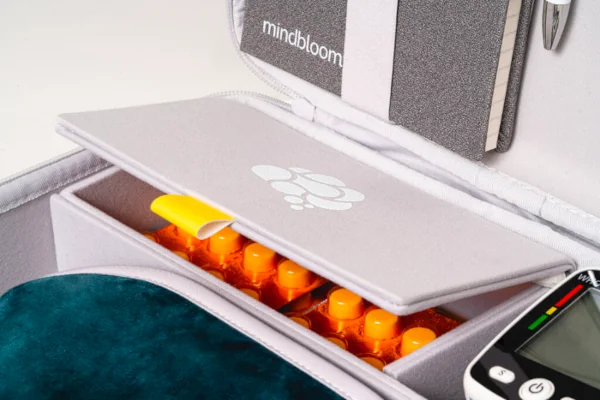
After your clinician consult, Mindbloom ships you a “Bloombox” containing everything needed for at-home treatment.
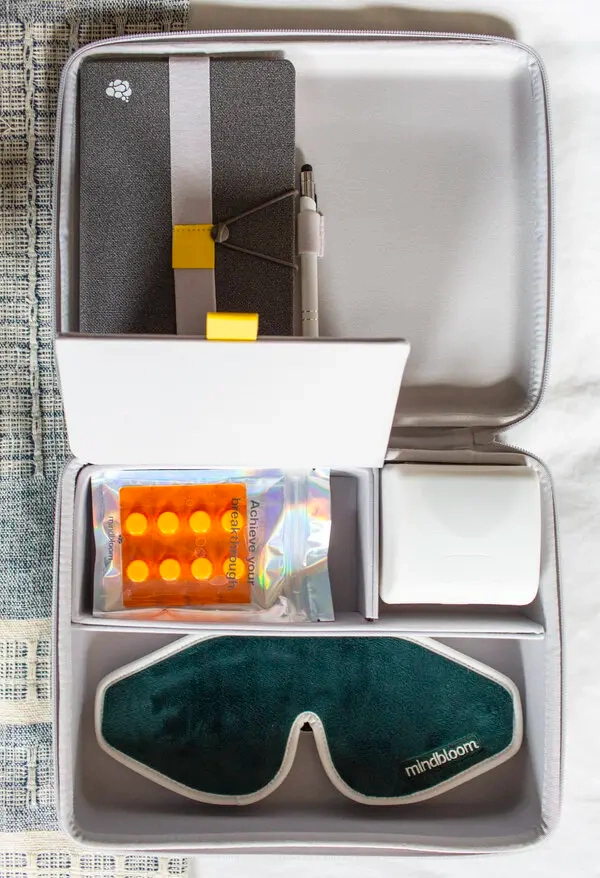
This includes 6 doses of ketamine tablets, an eye mask, headphones, and instructions.
When it’s time for a session, you meet with your assigned Mindbloom guide over video chat.
They walk you through preparing your space and safely administering the medication.
Treatment involves placing a ketamine tablet under your tongue for 7 minutes, spitting it out, putting an eye mask on, and immersing yourself in the experience.
The experience typically lasts around 60 minutes, but it may vary slightly by person.
Before your first ketamine therapy session, Mindbloom requires you to have a Peer Treatment Monitor (PTM) present.
A PTM is a trusted adult who remains with you throughout the experience to ensure safety and provide support if needed.
Your PTM will be coached by your Mindbloom guide on how to monitor you during the session and assist if any issues arise. Read more about the PTM role here.
After the session is complete, you are then encouraged to journal any major themes or insights that were present. This is because memories of the ketamine experience can fade quickly.

Integrative Therapy Options
In addition to the ketamine medication, Mindbloom offers optional integration therapy services.
This includes access to group video sessions to discuss experiences and insights from treatment.
You can also pay for additional 1:1 virtual integration coaching as well
The integration therapy aims to enhance the benefits of the ketamine experience.
Pricing
Mindbloom charges between $209 and $159 per session, depending on how many months you commit to. It’s billed on a monthly basis, with 2 sessions per month.
So for example, if you commit to 6 sessions (3 months), it’s $418 per month. Whereas if you committed to 18 sessions (9 months) it’s $318 per month ($159 per session, which is every 2 weeks).

Whereas for IV (intravenous) ketamine, depending on where you go it can be anywhere from $400 – $1,000 for a single infusion.
This means that for multiple-session ketamine treatment, Mindbloom is significantly cheaper. Granted, comparing intravenous to oral ketamine is not an apples-to-apples comparison.
The Pros of Using Mindbloom
Based on my research and reviews from Mindbloom users across various platforms, there appear to be some notable advantages to using their services.
Convenience and Accessibility
Mindbloom allows clients to undergo ketamine therapy from the comfort of your home.
This removes barriers like travel costs and time required to visit a clinic in person for intravenous infusions.
Making it more accessible option for those who may not otherwise pursue this treatment.
Supportive Experience
Having an assigned guide walk you through every session can provide a sense of safety and comfort during the ketamine experience.
Their presence allows you to fully relax knowing assistance is available if needed.
The optional group and 1:1 integration therapy also provide support in processing and integrating experiences from the trip.
Positive Outcomes
According to a clinical study by Mindbloom, 89% of clients reported improvement in depression and anxiety symptoms after 4 sessions. 30% of participants achieved full remission of their symptoms.2At-home, sublingual ketamine telehealth is a safe and effective treatment for moderate to severe anxiety and depression: Findings from a large, prospective, open-label effectiveness trial | Hull et al. | 2022 | Journal of Affective Disorders
While individual results will vary, these findings indicate the potential effectiveness of Mindbloom’s model.
However, it’s worth stressing that the study was funded by Mindbloom itself.
And also, a lot of the initial ketamine research was done using intravenous ketamine infusions – rather than oral usage, so that’s something to keep in mind.

The Cons and Controversies
When researching any product or service online, it’s important to note there can be a bias towards negative reviews, as satisfied customers are less likely to voluntarily post about normal experiences.
However, I did come across some common downsides mentioned about Mindbloom’s service worth covering.
Pricing and Billing Confusion
Reddit reviews often cite issues with confusing or unclear billing from Mindbloom.
The total costs may exceed expectations, and some clients report being charged without sufficient communication.
However, Mindbloom’s pricing is clearly outlined on their website, as discussed above.
Customer Service Complaints
Multiple posters online describe difficulty contacting Mindbloom’s customer support or issues with unresponsiveness.
This seems at odds with the individualized care promised throughout the process.
However, assessing customer service comprehensively is difficult given the small sample of complaints. But still, I believe it’s a concern that some customers report issues.
Safety and Oversight Concerns
Some may be wary of self-administering ketamine without in-clinic monitoring.
However, Mindbloom points to their study showing 95% of clients reported no side effects.
The guides are also said to be trained to support clients throughout the effects of the medication.
While a remote consultation cannot match in-person care, Mindbloom’s model does appear relatively safe under clinical guidance.
But I think it’s still advisable to thoroughly research the treatment, consult your doctor, and take precautions to remain safe when self-administering any medication.
Roundup
I’ve aimed to provide an overview of Mindbloom’s at-home ketamine therapy service based on available information online and user reviews.
The goal was to transparently present Mindbloom’s offering to allow readers to make an informed decision.
It’s important to note that individual experiences and results will vary. I cannot make any definitive claims about the efficacy and safety, nor can I recommend Mindbloom outright.
Ultimately, the decision to pursue this type of treatment is a personal one that requires careful consideration of your specific health situation.
I hope this article provides a balanced starting point for understanding Mindbloom’s at-home ketamine treatment option.
Further Reading
If you’re researching Mindbloom, you may also find the following article interesting:
- Mindbloom vs Joyous – How Do These Ketamine Therapy Providers Compare?
- Elon Musk uses intermittent ketamine therapy to manage depression
References
- 1Ketamine—50 years in use: from anesthesia to rapid antidepressant effects and neurobiological mechanisms | Kohtala | 2021 | Pharmacological Reports ↩︎
- 2At-home, sublingual ketamine telehealth is a safe and effective treatment for moderate to severe anxiety and depression: Findings from a large, prospective, open-label effectiveness trial | Hull et al. | 2022 | Journal of Affective Disorders ↩︎
Disclaimer: The above information is for research and educational purposes only and not a substitute for professional medical advice. See full medical disclaimer.