Rhonda uses collagen powder daily to benefit her skin, hair and joints.
Consuming it by adding it to her smoothies, coffee and sometimes tea.
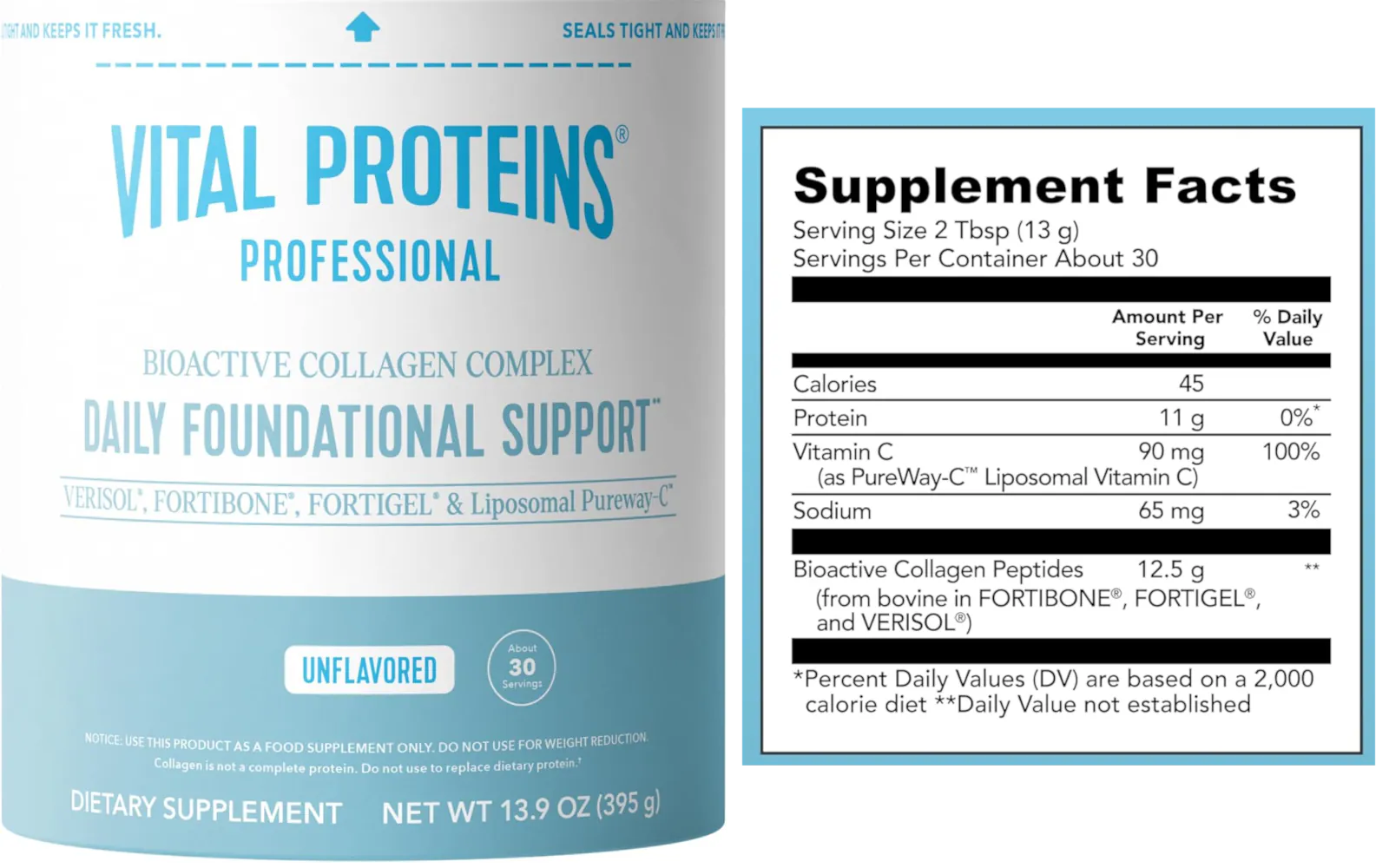
She currently preferences using a product from Vital Protein’s Professional range called Daily Foundational Support.
In her July 2026 Q&A she described switching to it because it allows her to take one product and get both the Versiol and Fortibone peptides together. Specifically saying she takes ~20g in the morning, split across her coffee and a later decaf coffee or tea.
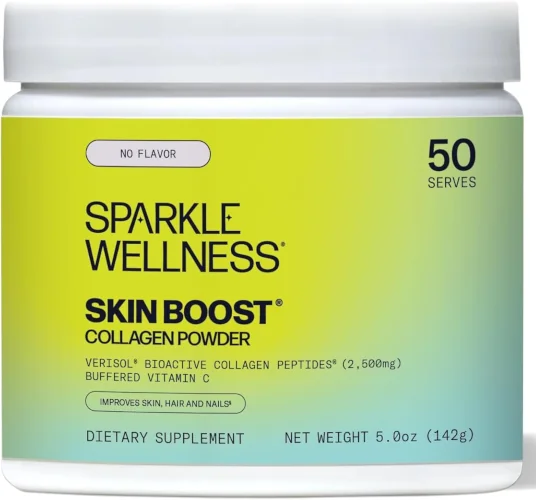
In that same Q&A she added, Sparkle is fine though. Sparkle is the brand she was using prior, and contains Verisol (but not the Fortibone) collagen peptides.
Sparkle sell two types of verisol collagen products:
- Sparkle Skin Boost – which is Collagen + vitamin C
- Sparkle Skin Boost Plus – which then adds hyaluronic acid to the above
When Rhonda was taking Sparkle, I wasn’t 100% clear which of the two versions she was using, but I assume the version without hyaluronic acid.
Why Verisol Collagen?
Verisol collagen has the following properties:
- Improved absorption and bioavailability – Enzymatically broken down into smaller peptides with an optimal molecular weight (2–5 kDa) for absorption and bioavailability.
- Specific amino acids – Engineered for specific amino acid sequences that stimulate collagen production in skin fibroblast cells.
- Targeted – it’s optimized peptide structure ensures delivery to the dermis and effective interaction with skin metabolism.
- High Amino Acid Content: Rich in glycine, proline, and hydroxyproline, essential for collagen synthesis and skin repair.
They have at least 5 studies to back this up:
- Reduces wrinkles and fine lines
- Increases skin elasticity
- Improves skin surface structure (decreases cellulite)
- Increases hair thickness
- Improves nail growth and strength
With the diagram below illustrating these results (also see bigger version).

Why Fortibone Collagen?
Whereas the peptides in verisol collagen target the skin, fortibone (as the name suggests) targets bone mass, strength and mineral density.
The data backing this is a 2018 study of 131 postmenopausal women with reduced bone mineral density, of which half took 5g of fortibone for a year, and the other half were the placebo group.
The collagen group showed an increase in bone mineral density, relative to the placebo group with gains of 4.2% in the lumbar spine and 7.7% in the femoral neck part of the hip. Whereas bone density trended down in the placebo group.
Gelita, the company behind fortibone, then funded a 4-year follow-up study, which 23 women completed – and a steady progressive increase in bone mineral density was observed. This study was open-label, with no placebo group. The participants were drawn from the original trial, including women who had been in the placebo group and started taking Fortibone at this point.
Author’s note: both studies were funded by Gelita, the company fortibone, and to my knowledge haven’t been independently replicated yet.
Roundup
Above we’ve looked at the type of collagen Rhonda Patrick currently favors in 2025.
If you’ve any questions or comments, please leave them below.
Further reading:
- See our article on Rhonda’s full supplement stack
- See how Jillian Michael’s uses collagen in her daily routine
Disclaimer: The above information is for research and educational purposes only and not a substitute for professional medical advice. See full medical disclaimer.
Note: We have no affiliation with Rhonda Patrick - this article is based on publicly shared information.