In the article below we’ll look at Eric Berg’s approach to probiotics. Covering what he takes personally and what he suggests for others with specific needs/issues.
TLDR: Eric Berg Probiotics
- L. reuteri yogurt: He makes William Davis’s version at home, fermenting a starter culture with half and half for 36 hours at 99°F, and eats half a cup before bed.
- Friendly Bacteria liquid: His own 12-strain fermented liquid, started at half a tablespoon in water before bed and built up from there.
- Food before capsules: Kefir, sauerkraut, kimchi and raw aged cheese are his everyday sources. Pasteurised supermarket yogurt is the one he dismisses.
- Timing: With or after a meal to dilute stomach acid, or last thing at night. Not alongside apple cider vinegar or lemon water.
- The 96% figure: He cites roughly 96–97% of people as having lost L. reuteri. That number traces to a best estimate from William Davis, not to a published study.
- Condition picks: Lactobacillus and bifidobacteria only for constipation, fermented vegetables for reflux, non-dairy liquid probiotics for lactose intolerance.
- Evidence check: L. reuteri has genuine RCT support in narrow indications. The body-composition and mood claims attached to it are anecdotal.
What Eric Berg Takes Himself
Eric Berg takes the following:
- A homemade L. Reuteri yogurt
- A liquid probiotic
- Kefir
We’ll explore them in more detail below.
L. Reuteri Yogurt
The protocol comes from William Davis, and Eric Berg adopted it on camera after reading about it. Standard yogurt ferments for around four hours. This one runs nine times longer.
- Starter: One capsule of a commercial L. reuteri product, opened into the mix. BioGaia Gastrus is the strain source commonly used for it.
- Prebiotic: Two tablespoons of inulin, which feeds the culture during the long ferment.
- Base: Organic half and half, first mixed with the starter + inulin to form a paste, then the rest added
- Ferment: 36 hours at 99°F in a yogurt maker, then refrigerated.
- Serving: Half a cup daily. Eric Berg says he takes his right before bed (source).
William Davis puts the yield at around 300 billion live bacteria per cup (often referred to as colony forming units (CFU)), arrived at through repeated flow cytometry counts on his own batches (source). That figure has not been independently verified, but gives a ballpark idea.
Friendly Bacteria Probiotic Liquid

His own brand liquid is a fermented “effective microbes” product with 12 strains, including Saccharomyces cerevisiae.
The label direction is 1 tablespoon (15 ml) daily before bed. Eric Berg’s own instruction is more cautious. He suggests starting at half a tablespoon in a third of a glass of water before bed, building up over a few days, and dropping back to a few drops for anyone with a fragile immune system (source).
Kefir After Meals
Kefir is the fermented food he names as part of his own routine, taken after a meal rather than on an empty stomach (source).
Eric Berg’s Own Account Of L. Reuteri
He went into the Davis protocol sceptical, by his own description. What he says he then noticed, in order:
- Day three: A social shift, which he describes through his wife’s reaction that he wanted to hug her “like five times a day”.
- Four to six months in: Weight from 185 lb to 195 lb, which he attributes to muscle and says was the only change he made.
- Sleep: Waking at 6:30am instead of 4 or 4:30, with workout soreness resolving.
- Stress: A calmer baseline, which he frames as oxytocin lowering cortisol (source).
He also traces his own presumed loss of the microbe to repeated childhood antibiotic courses for sore throats.
Why Eric Berg Focuses On L. Reuteri
His argument is that this microbe is unusual in colonising the small intestine rather than the colon, where it produces bacteriocins that suppress the overgrowth behind bloating and SIBO, and that decades of antibiotic use have stripped it from most people.
The prevalence number is where care is needed. William Davis’s wording is that “about 4% of people, 1 in 25 people still have it”, which he presents as a best estimate from recent evidence with a confirming study only proposed (source). Eric Berg repeats it as 96–97% of the population missing the microbe. It is an estimate quoted as a statistic.
Author’s note: The direction of travel is reasonable. Reviews of L. reuteri describe a marked decline in its prevalence in human populations over recent decades, and the microbe does have real RCT support in specific indications, including reduced bone loss in older women with low bone mineral density (source) and improved bowel movement frequency in adult chronic functional constipation (source). What no peer-reviewed source supplies is the 96% figure itself, or trial evidence for the muscle, testosterone and waist-circumference effects (source).
Fermented Foods Over Capsules
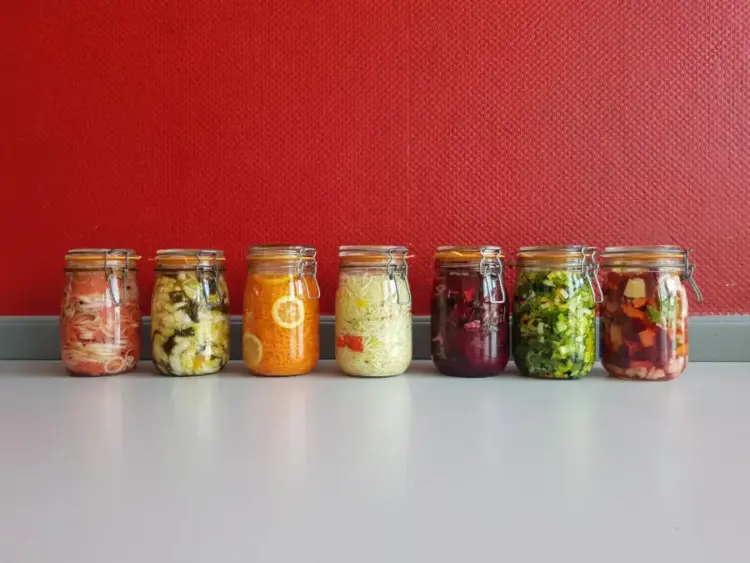
The consistent editorial line across his content is that food is the primary source and supplements are secondary. Most supermarket yogurt is pasteurised, which kills the cultures, so what reaches the gut is dead bacteria plus lactose and added sugar (source).
The per-serving counts he cites, all approximate and heavily dependent on brand and ferment:
- Kefir: Around 27 billion colony forming units (CFU), roughly nine times yogurt, with most of the lactose consumed during fermentation.
- Yogurt: Around 3.6 billion CFU, and only if it is genuinely live.
- Sauerkraut: Around 3 billion CPU for a serving.
- Kimchi: Around 5 billion CFU per cup, with a lactic acid bacteria profile he treats as distinct from other ferments (source).
He also points to raw aged cheeses such as Gruyère, Gouda and Parmigiano Reggiano as an under-used whole-food source (source).
Author’s note: Treat those CFU figures as illustrative. Real-world counts vary by an order of magnitude between brands, batches, etc (source).
Condition-Specific Guidance
Four of his shorter videos handle specific complaints. In each case the framing below is his, not ours.
- Constipation: He only suggests lactobacillus and bifidobacteria strains, since he argues other strains can worsen it (source).
- Acid reflux: He suggests fermented vegetables and kefir, on the reasoning that reflux is driven from the lower gut via SIBO and the vagus nerve rather than from excess acid (source).
- Fatty liver: Probiotics as a way to reduce bacterial translocation, endotoxin and TNF-alpha load, and the ammonia reaching the brain (source).
- Lactose intolerance: Fermented vegetables, or a non-dairy liquid probiotic in place of cultured dairy (source).
Worth noting that the broader scientific evidence base is thinner than the confidence of these picks suggests.
His Autoimmune Protocol
This is the part of his content that needs the most care. His three-part stack is to re-establish B. infantis and L. reuteri through home-cultured dairy rather than pills, add selenium at 200 mcg, and take vitamin D at doses well above conventional levels to get past what he calls vitamin D resistance. He also suggests three-day water fasts to raise regulatory T cell counts (source).
The vitamin D figures he gives are 8,000 to 10,000 IU per day for maintenance, rising to “20, 30, 40, 50,000 international units every single day” for a therapeutic effect (source).
Author’s note: The tolerable upper intake level for vitamin D in adults is 4,000 IU per day, and sustained intake above that carries a hypercalcaemia risk (source). Eric Berg’s therapeutic range sits at five to twelve times that limit. Anyone weighing this is in territory that needs blood monitoring and a doctor, not a video.
For a broader way of deciding whether a supplement earns its place at all, the questions Peter Attia asks before adding anything are a useful counterweight to protocol-first thinking.
Prebiotics And Probiotics
Probiotics are the live microbes. Prebiotics are the soluble fibres that feed them, and his list of suggestions is garlic, onions, asparagus, leeks, dandelion greens, artichokes and chicory root (source). The inulin in the yogurt recipe is doing the same job inside the jar.
His Own Products And Other Options

His capsule, Probiotics with Prebiotic Blend, holds 10 strains at 60 billion CFU alongside a prebiotic blend of ginger, fennel, artichoke and peppermint, in acid-resistant delayed-release vegetable capsules, at one capsule daily with or without food (source).
Options readers may want to compare against his picks:
- Saccharomyces boulardii: A yeast rather than a bacterium, with a pooled relative risk of 0.47 for antibiotic-associated diarrhea across ten trials, which makes it the better-evidenced choice for antibiotic cover specifically (source).
- BioGaia Gastrus: The L. reuteri tablet most people use as the starter culture, and an option for anyone who wants the strain without running a 36-hour ferment.
- Single-strain products matched to an indication: Since benefit is strain-specific, matching the strain to the published trial tends to beat chasing CFU totals.
Whichever route, quality and handling matters more with live cultures than with most supplements, since heat and age both reduce viable counts. Our notes on buying supplements without ending up with fakes apply directly here.
Further Reading
If you found this post on Eric Berg’s probiotics helpful, you may also like:
- Eric Berg Magnesium – What he takes himself and how he ranks the different magnesium forms
- Eric Berg Electrolyte Powder – What he takes & why
Eric Berg’s first suggestion is fermented food rather than a supplement, specifically kefir, sauerkraut, kimchi and raw aged cheese. Where a supplement is used, he points to L. reuteri yogurt made at home using William Davis’s 36-hour method, and he sells his own 12-strain Friendly Bacteria liquid and a 60 billion CFU capsule (source).
Yes. He has said on camera that he makes and eats half a cup of L. reuteri yogurt before bed, and separately that he takes his own Friendly Bacteria liquid probiotic, starting at half a tablespoon in water at night (source).
He follows William Davis’s method. One opened L. reuteri capsule plus two tablespoons of inulin are mixed to a paste with organic half and half, made up in a yogurt maker, and held at 99°F for 36 hours before refrigerating. His serving is half a cup a day (source).
He suggests taking them with or after a meal, so that food dilutes stomach acid, or last thing before bed. He also suggests not taking them alongside apple cider vinegar or lemon water, since both add to the acid load (source).
Eric Berg’s position is yes, on two grounds. He cites kefir at roughly 27 billion CFU per serving against about 3.6 billion for yogurt, with a wider strain range and far less lactose, and he notes that most commercial yogurt is pasteurised, which kills the cultures (source). Those counts are approximate and vary by brand and ferment.
Disclaimer: The above information is for research and educational purposes only and not a substitute for professional medical advice. See full medical disclaimer.